Let’s take it even further, going back to our original example of books in one’s room. The following is an example answer of possible data points from a collection of objects, specifically on books that a person might have in their room.
There are quite a number of different data points that could be gathered from books. There is the physical size of the books, such as A5, pocket size, or letter size to name a few. There are also distinctions between the type of book, (textbook, hardback, paperback, trade paperback), the number of pages, the cost of each book, or the subject. There are even more data points beyond the examples listed here that can be found from just a few books! What do you think those data points are? Come up with a few that aren’t listed here on your own.
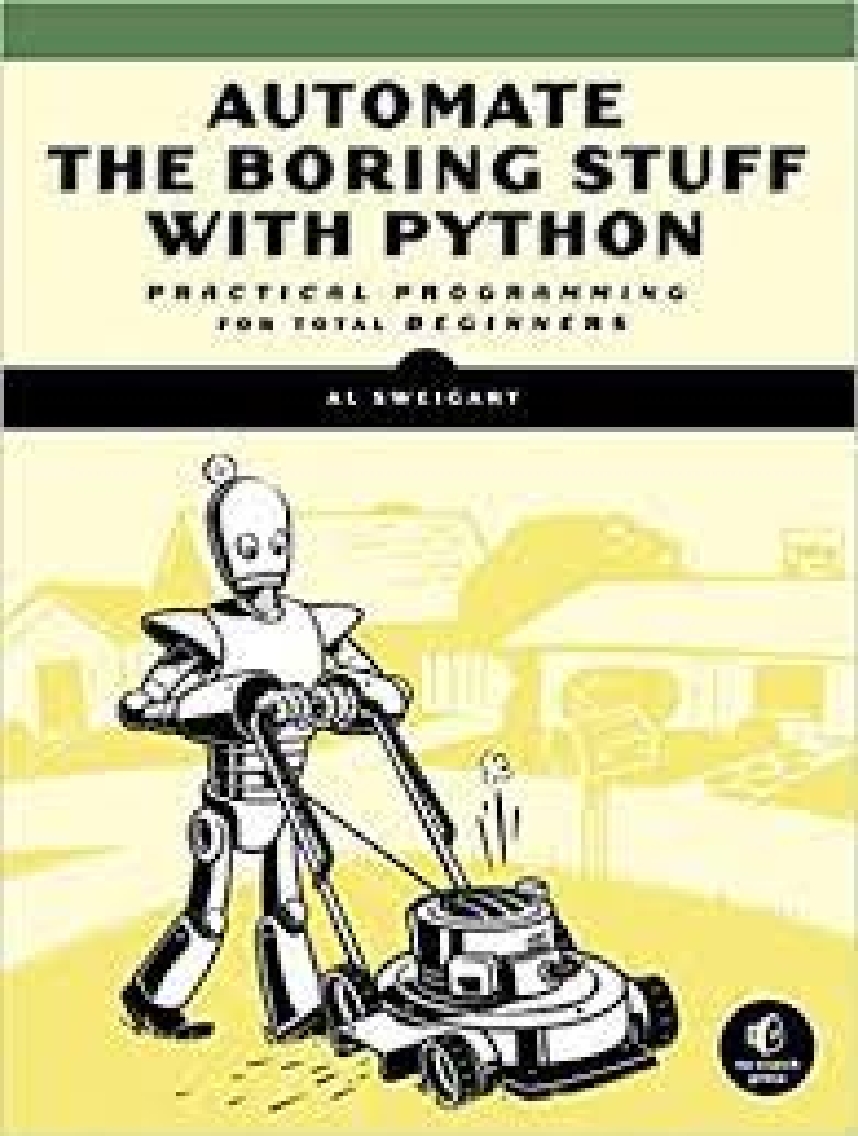
Using this book as an example, here are just some of the answers that you could come up with:
This book has a title: ‘Automate the Boring Stuff With Python: Practical Programming for Total Beginners’, and edition number: ‘2nd edition’, is a textbook of a unique size, contains 547 pages, is on the subject of programming and computer science and costs $53.95 Canadian. Other data points to consider: the author ‘Al Sweigart’, the publishers ‘No Starch Press’ and the original publishing location which is San Francisco. There is even further data which might be available with research, such as the word count of the book.